The Unexpected Discovery
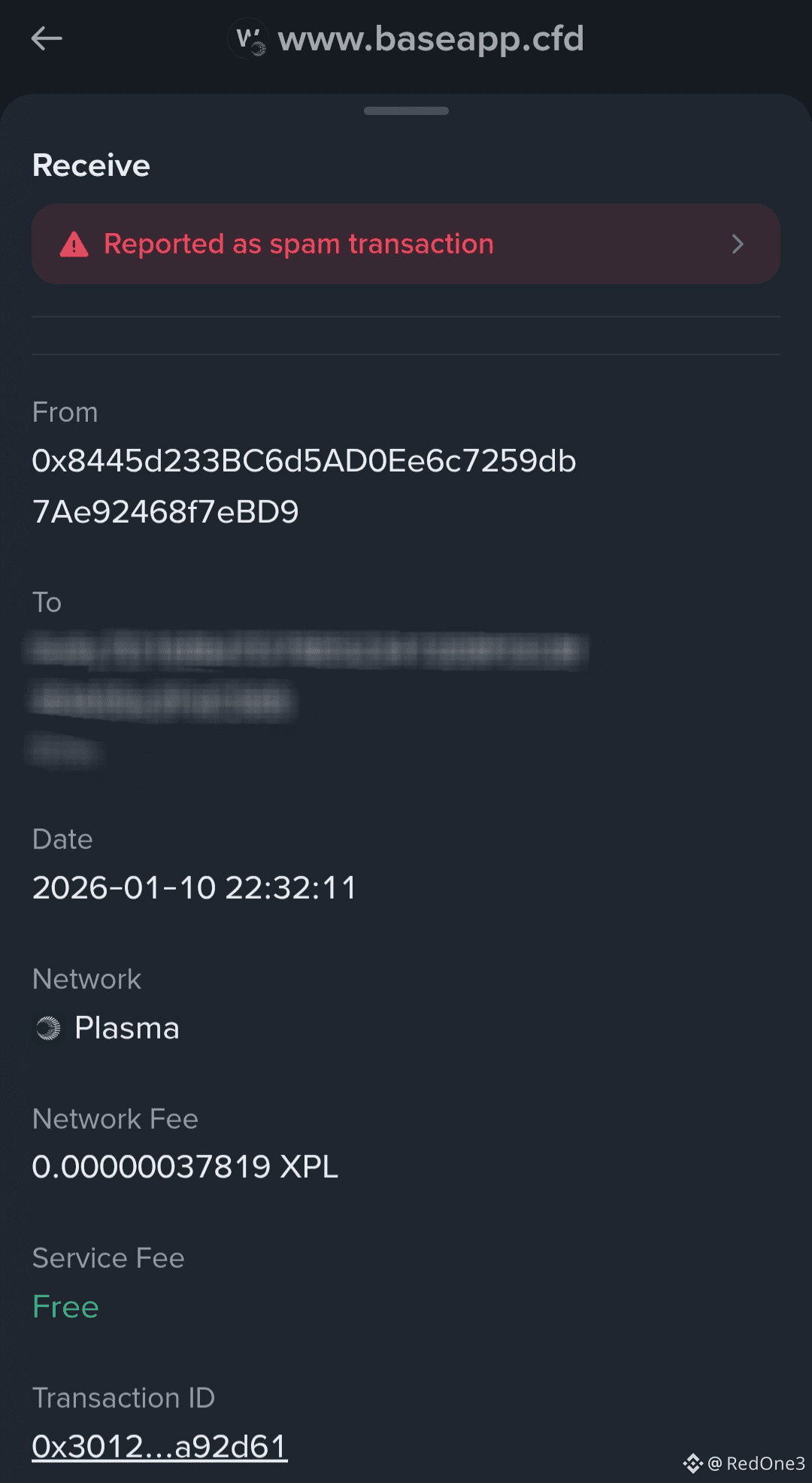
Yesterday, while conducting my routine wallet maintenance across multiple Web3 platforms, I stumbled upon something unsettling in one of my wallet histories: three unauthorized token transfers that I never requested or expected. These weren't from any airdrop I participated in, nor from any transaction I initiated. They simply appeared, uninvited and unexplained, on the @Plasma network.
The Investigation Process
My curiosity shifted to concern, prompting a deeper investigation. Using Plasmascan (the official Plasma blockchain explorer), I uncovered alarming details about these suspicious tokens.
What I found:
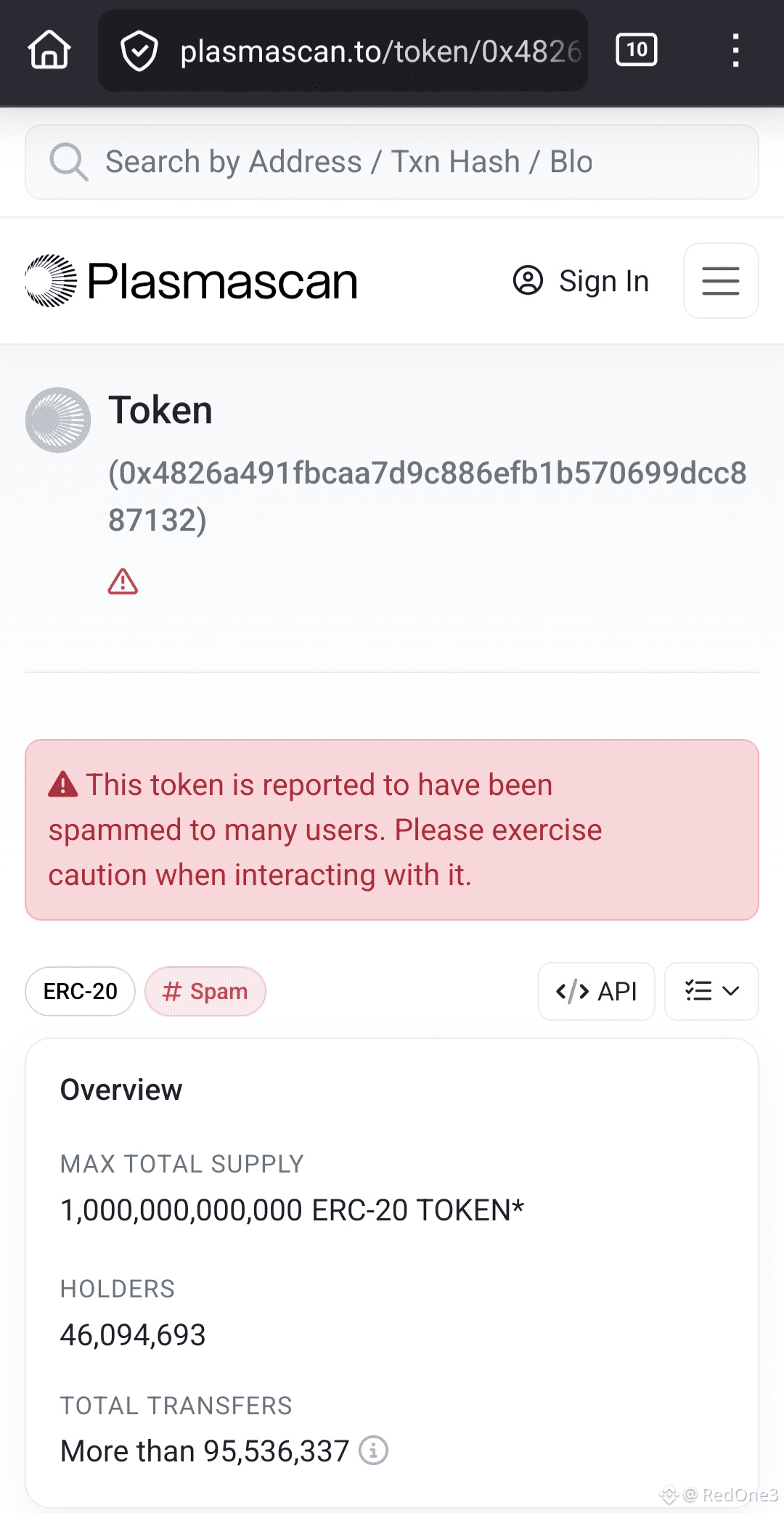
1. Massive Spam Operation: One token contract was reported as spam with over 46 million holders and 95 million transfers - clear evidence of a widespread spam campaign.
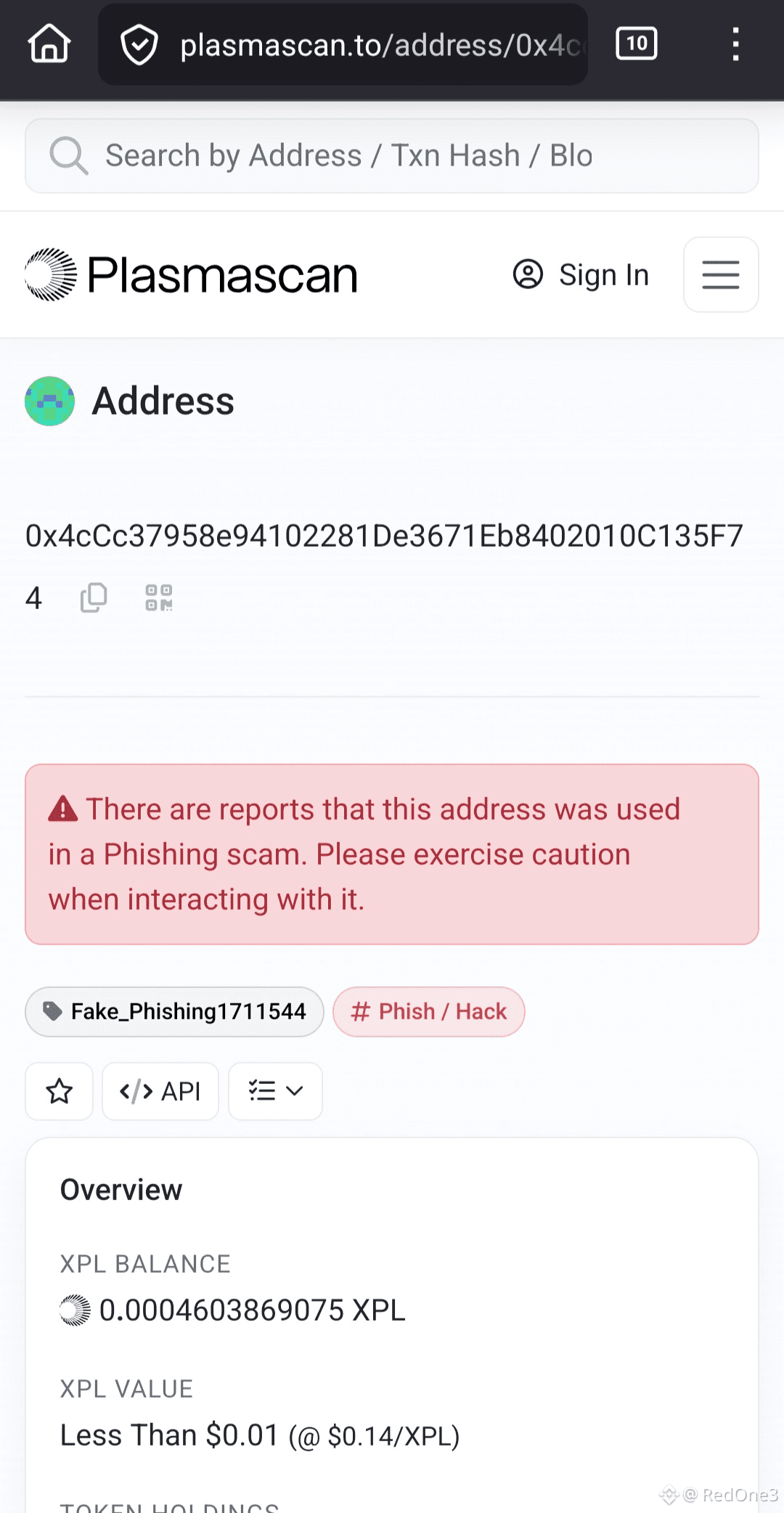
2. Phishing Addresses: Sender addresses were flagged with explicit phishing warnings like "Fake_Phishing1711544" on Plasmascan.
The Shocking Scale
The numbers tell a frightening story:
· 1,000,000,000,000 tokens in total supply
· 46,094,693 holders affected
· 95,536,337+ transfers recorded
· All from addresses marked with phishing warnings
Why This Matters
This incident highlights critical points for blockchain security:
1. Transparency is Powerful: Open ledgers allow immediate scam verification
2. Scale of Threat: This is industrial-scale spamming, not isolated incidents
3. Explorer Importance: Tools like Plasmascan are essential for due diligence
The Protection Protocol
From this experience, I developed a clear action plan:
✅ Step 1: Always check unknown tokens on blockchain explorers
✅ Step 2: Look for "Spam" or "Phishing" warnings
✅ Step 3: Never approve interactions with flagged tokens
✅ Step 4: Use "Hide Token" feature immediately
✅ Step 5: Report suspicious tokens to help the community
Community Responsibility
The $XPL ecosystem's security depends on our collective vigilance. When blockchain users:
· Report suspicious activities promptly
· Share warning signs with others
· Educate newcomers about verification tools
· Verify before trusting any unsolicited token
Final Thoughts
To everyone navigating the Web3 space: Your wallet's security starts with awareness. These spam campaigns aren't random - they're calculated attacks. The tools exist, the data is public, and the choice to verify is in your hands.
Remember: If you didn't request it, research it. If it looks suspicious, hide it. If warnings exist, believe them. Together, we can build safer blockchain ecosystems.