 Let's be honest—most NFTs look perfect on paper: the token lives forever on the chain, but the actual image, video, or 3D model? It's usually hanging by a thread on some regular server. One day the link works, the next it's 404, or worse, the host swaps it out or shuts down. Marketplaces like OpenSea have been nagging projects to freeze metadata or go fully decentralized for years because without reliable media storage, your "ownable" art can vanish, leaving collectors with a fancy receipt for nothing.
This issue is blowing up again because NFTs aren't just cute profile pics anymore. Games need high-res assets that load fast, memberships want multiple versions (thumbnails, full views, previews), tickets have to resolve every time, and dynamic or interactive pieces can't risk a single point of failure. As projects push bigger files—videos, loops, rich renders—the old "pin it to IPFS and hope" trick turns into a constant headache. People care more now that the hype has settled; what remains is whether the infrastructure actually holds up.
Walrus steps in exactly here, and what makes it feel different is how cleanly it splits responsibilities. Walrus is all about handling the big binary blobs (images, videos, audio—anything chunky), while Sui takes care of the smart stuff: coordinating everything, managing payments, owning storage capacity, and keeping verifiable records of what's stored and for how long.
The docs lay it out plainly: storage space lives as an ownable resource on Sui that you can buy, transfer, split, or merge. The blobs themselves become objects on Sui too, so smart contracts can easily check if a file exists, see its expiration date, or extend its life. No more vague URLs—your NFT metadata stays small, clean, and stable (just name, traits, description, plus a solid pointer to the blob), while the heavy media gets treated as a first-class citizen.
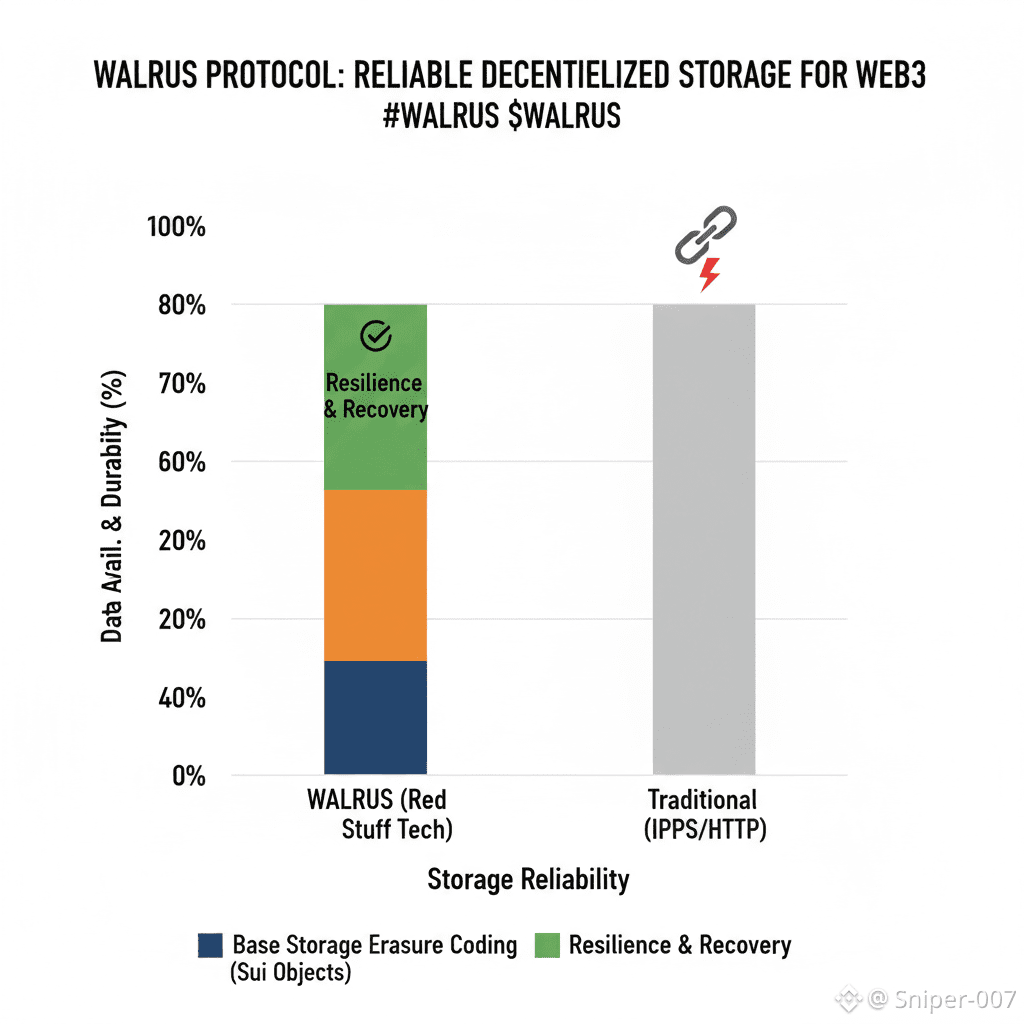
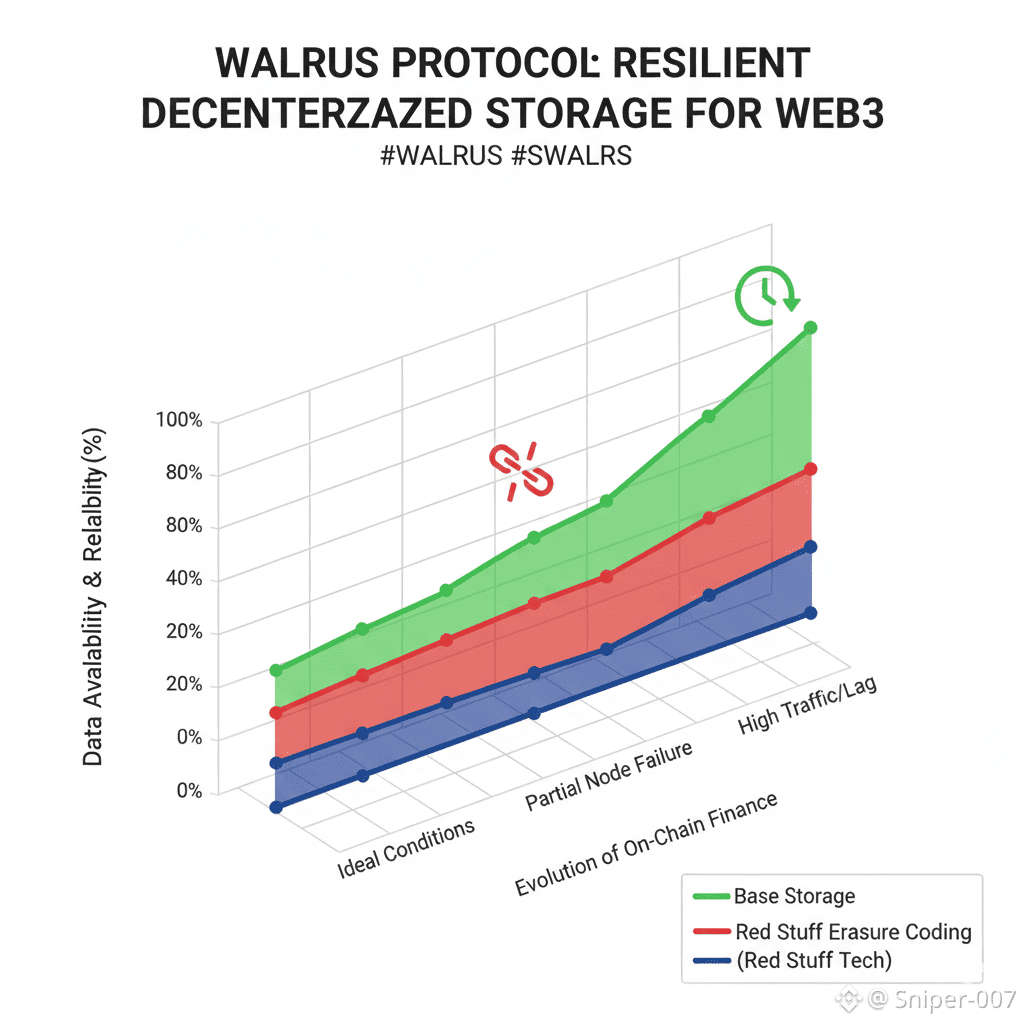
Under the hood, Walrus avoids the usual waste of copying the whole file everywhere. Instead, it uses RedStuff, their clever 2D erasure coding scheme, to break the blob into smaller "slivers" and spread them across storage nodes. This setup is super resilient: docs and research say you can reconstruct the original even if up to one-third of nodes go offline normally, or up to two-thirds after some sync time. The overhead? Roughly 4-5x the original blob size—way better than full replication, and still tough enough for real-world node churn.
For NFT creators, this creates a straightforward, reliable pattern. Upload your media as a blob on Walrus, get a content-addressed ID, and point your token metadata there. The process is straightforward: grab storage capacity on Sui, register the blob, encode it into slivers, distribute to the current committee of nodes, collect signed proofs from a two-thirds quorum, and mint an onchain Proof-of-Availability certificate. That certificate is your boring-but-gold receipt proving the media is really there and available.
From there, things get flexible. Freeze the core metadata forever, but add new versions or higher-res renditions as separate blobs, referenced in a manifest. Store thumbnails for quick wallet views, full-res for galleries, animated previews for social—all without turning your tokenURI into a mess of redirects. Since storage resources and blobs are programmable Sui objects, you can build in auto-renewals, project rules for expiration, or controls on who extends lifetimes—no need for sketchy offchain admins.
The timing feels right because Walrus has moved past whitepaper stage. It launched on public testnet, with real tools (CLI, APIs, SDKs), explorer support, and examples like dynamic NFTs and sites already using it. Projects are storing NFT collections, media libraries, and more, with expectations of real traffic and budgets. It's chain-agnostic at heart, so even non-Sui apps can plug in, but the tight Sui integration makes everything composable and verifiable.
Of course, tradeoffs exist—storage isn't free forever (someone pays over time via WAL tokens), and fast delivery still leans on gateways or CDNs. But the big win is simple: stop cramming heavy media into fragile links or centralized hosts. Treat it as proper decentralized infrastructure. Walrus doesn't reinvent what an NFT is—it just makes sure the part everyone used to shrug off (the actual file) is something you can genuinely count on.