The most revealing signals in infrastructure projects rarely come from roadmaps or launch announcements. They surface in quieter places, where teams explain tradeoffs instead of selling outcomes. Walrus’s blog reads less like a stream of updates and more like a record of decisions being made under constraint. Taken together, those posts sketch a direction that is narrower, more deliberate, and more long-term than the usual narratives around decentralized storage.
What stands out first is what Walrus does not obsess over. There is very little fixation on raw throughput numbers, headline capacity, or competitive comparisons framed as winner-takes-all. Instead, the writing keeps returning to durability, verifiability, and predictable behavior under load. This suggests a team that is less interested in winning a benchmark war and more concerned with what happens when storage is expected to behave like infrastructure rather than an experiment. That shift matters because most decentralized storage systems fail not when demand is high, but when incentives drift and guarantees quietly weaken.
The blog repeatedly frames storage as a commitment, not a service. Data is not something you upload and hope remains available. It is something the network explicitly agrees to preserve, with economic and cryptographic consequences if it does not. This framing reframes the role of the protocol itself. Walrus is not positioning itself as a marketplace where availability emerges statistically. It is positioning itself as a system where persistence is intentional, priced, and provable. That distinction hints at why so much emphasis is placed on receipts, proofs, and accountability rather than just replication counts.
Another recurring theme is skepticism toward abstraction for its own sake. Walrus does not appear eager to hide complexity behind friendly language if that complexity represents real risk. Instead, the blog leans into explaining why certain design choices are uncomfortable but necessary. Storage commitments are long-lived. Economic assumptions made at launch can persist for years. This awareness shows up in how cautiously Walrus approaches incentive design. Rather than promising permanently attractive yields, the writing acknowledges demand cycles, idle capacity, and the inevitability of periods where storage is underutilized. That honesty is rare, and it signals a system designed to survive quiet periods, not just growth phases.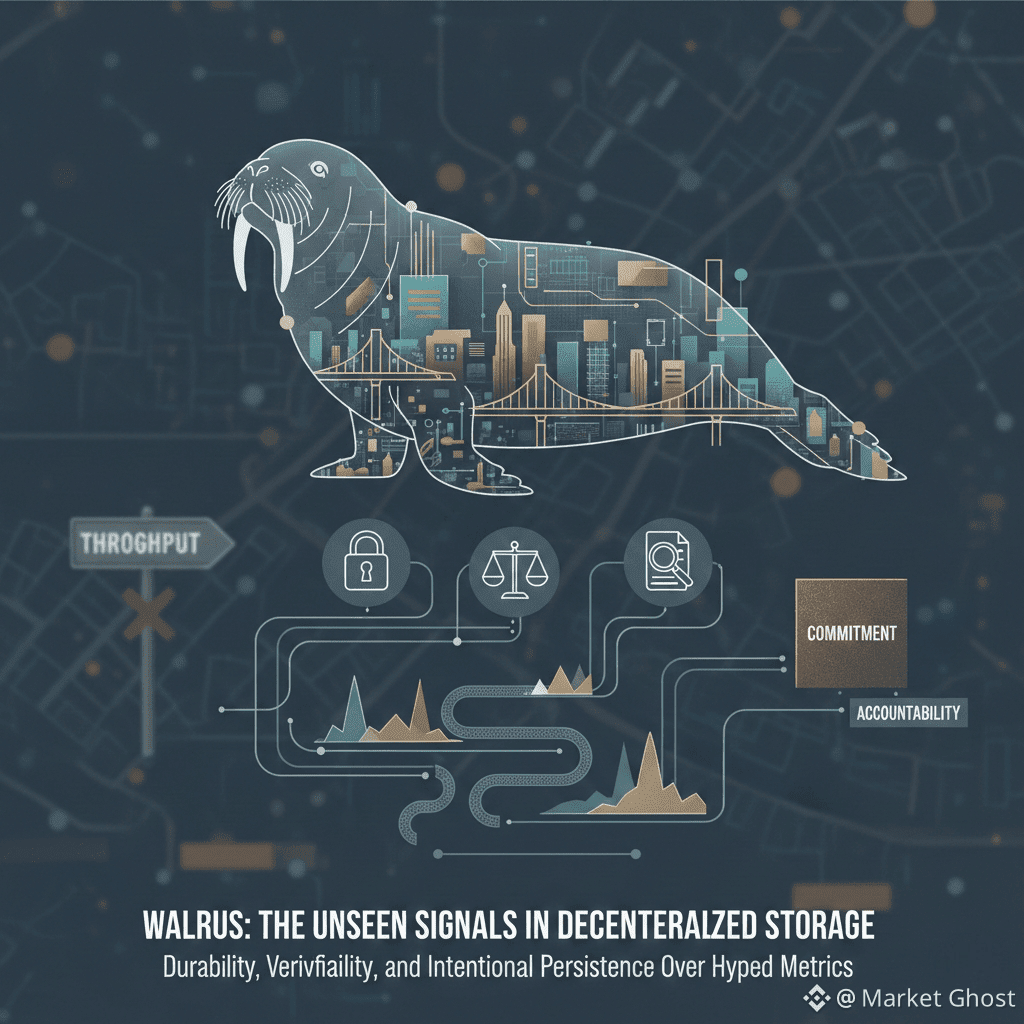
The treatment of incentives is particularly telling. Walrus does not frame rewards as a growth hack. They are treated as a coordination tool with limits. If demand does not materialize, yields compress. If commitments outlast usage, operators bear real opportunity costs. The blog does not try to soften this reality. Instead, it frames it as necessary discipline. Storage that is always profitable regardless of demand is usually storage that is not actually being paid for by users. Walrus appears determined to avoid that mismatch, even if it makes the protocol less immediately attractive to short-term capital.
There is also a clear signal in how Walrus talks about users. The implied user is not a hobbyist uploading disposable files. It is an application or system that needs data to remain accessible, unchanged, and verifiable over time. AI workloads, archival data, and long-lived application state come up not as buzzwords, but as stress cases. These are scenarios where losing data is not an inconvenience, but a failure. By anchoring design discussions around these use cases, Walrus reveals that it is optimizing for reliability under obligation, not flexibility under experimentation.
Another subtle cue is how the blog handles integration. Walrus does not present itself as a universal layer that everything should move to immediately. Instead, it positions itself as something you reach for when other approaches become insufficient. That posture implies patience. It suggests the team expects adoption to come from necessity rather than novelty. Systems migrate to durable storage when they have something to lose. Walrus appears to be building for that moment, not trying to manufacture urgency before it exists.
The tone of the writing also reflects an internal confidence that does not depend on constant validation. There is little defensive language and few exaggerated claims. Tradeoffs are acknowledged openly. Limitations are discussed without apology. This suggests a team that expects its work to be evaluated over time, not instantly rewarded. In infrastructure, that mindset often correlates with systems that endure because they are built to be questioned rather than believed.
Zooming out, the blog paints Walrus as a protocol that expects responsibility to compound. Long-term storage creates long-term expectations. Once data is committed, the network inherits an obligation that outlives market cycles and narrative shifts. Walrus seems aware that this obligation is both its risk and its moat. Few systems are willing to accept that kind of temporal responsibility. Those that do tend to matter most when hype fades and reliability becomes the only metric that counts.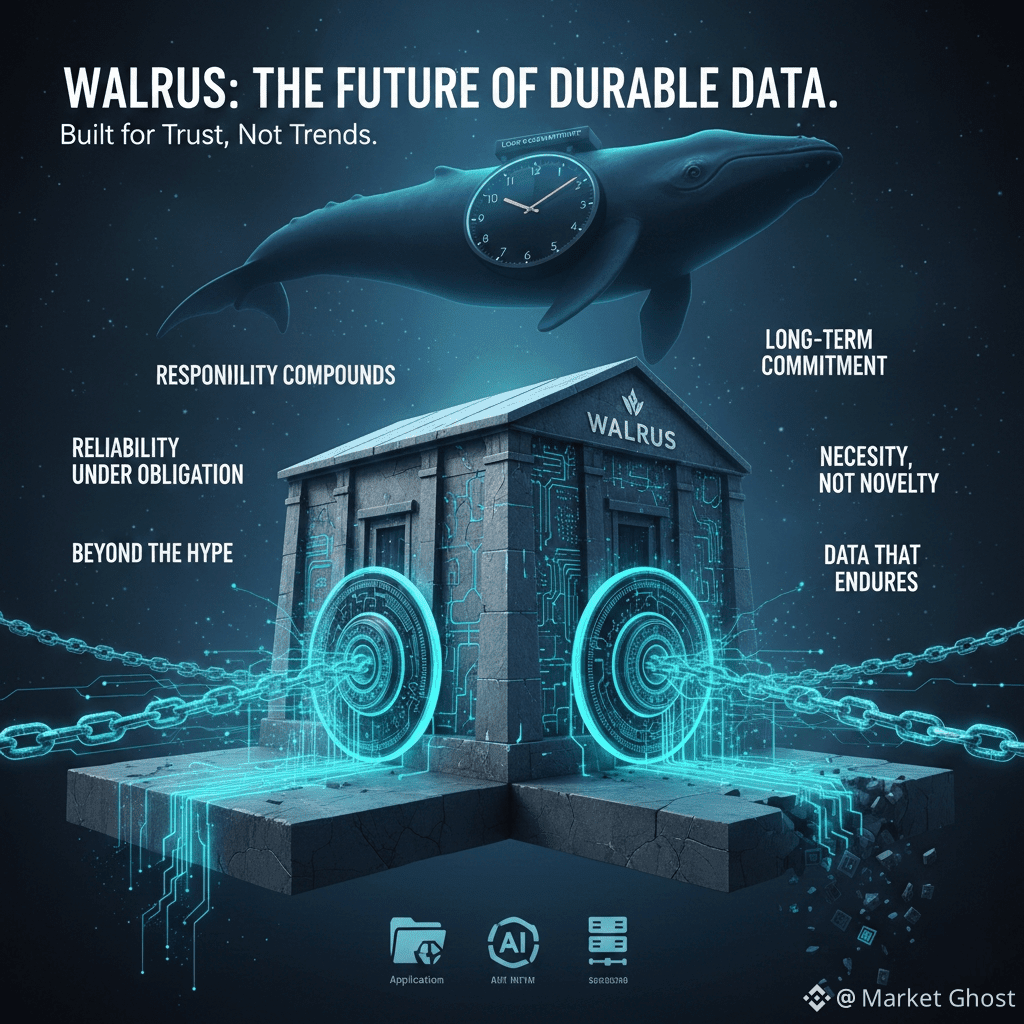
Where Walrus is actually headed, if the blog is taken seriously, is not toward being the loudest storage network, but toward being the one people stop questioning once they rely on it. That is a harder path. It demands conservative assumptions, uncomfortable incentive truths, and a willingness to disappoint speculators in order to satisfy users. The writing suggests the team understands this trade and has chosen it deliberately.
If that reading is correct, Walrus’s future will likely feel uneventful to outsiders and essential to those who depend on it. Data will remain available. Proofs will continue to verify. Incentives will fluctuate with demand instead of defying it. In decentralized infrastructure, that kind of predictability is not boring. It is rare. And it is usually the clearest signal of where a protocol is actually headed.