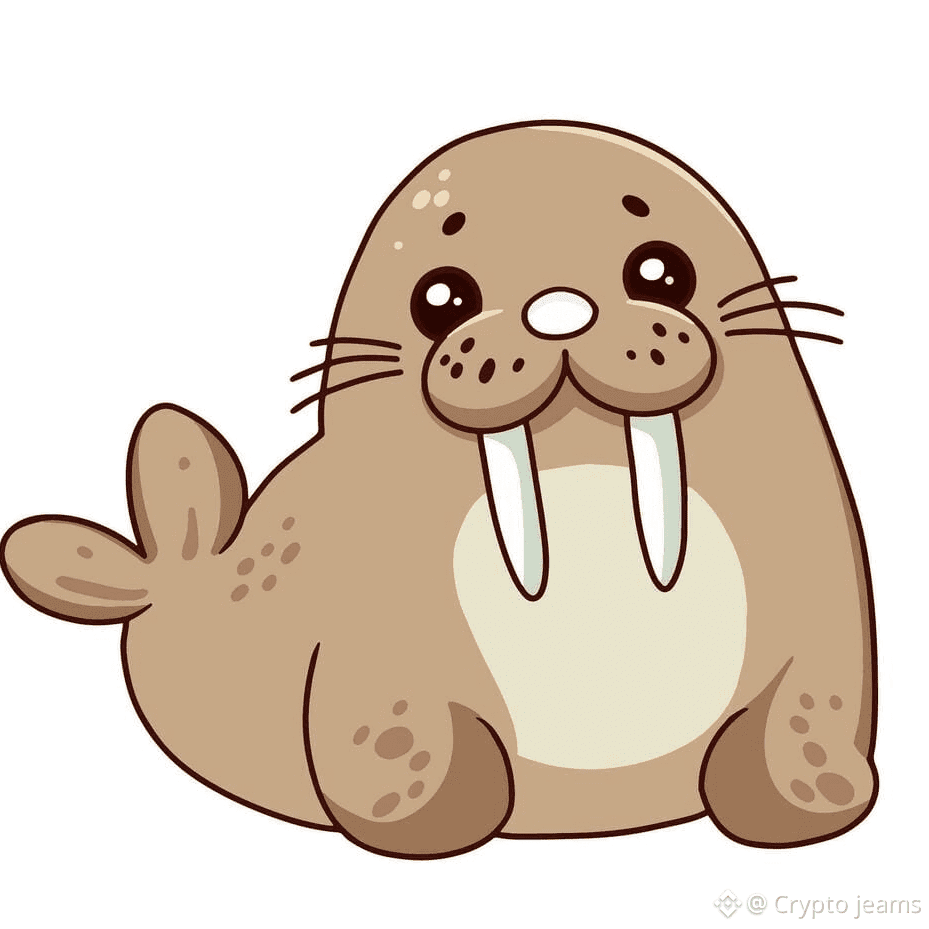
There's something deeply strange about locking eyes with a walrus. Those small, dark eyes peer back at you with an expression that somehow manages to be both ancient and curious, like your grandfather studying a smartphone for the first time. It's a look that seems to ask: Well, what do you want?
And maybe that's the perfect introduction to one of the Arctic's most magnificent oddballs.
A Face Only Evolution Could Love
Let's be honest walruses look like someone started designing a seal, got distracted halfway through, and just started adding random features. Tusks? Sure, why not. Hundreds of whiskers that make them look like they're smuggling brooms in their face? Absolutely. Skin that hangs in folds like an oversized suit borrowed from a larger relative? Perfect.
But here's the thing: every weird feature has a purpose, and together they create an animal that's perfectly built for one of Earth's harshest neighborhoods.
Those tusks which are actually elongated canine teeth that can grow up to three feet long aren't just for show. Walruses use them like ice picks to haul their considerable bulk up to 4,000 pounds out of freezing water and onto ice floes. The scientific name Odobenus rosmarus literally means tooth walking sea horse, which is charmingly literal for scientific nomenclature. They'll also use their tusks to maintain breathing holes in ice, to defend themselves and their young, and critically to establish dominance in their social hierarchies.
The Mustache That Actually Works
Those magnificent whiskers aren't just for looking distinguished. A walrus has between 400 and 700 of these vibrissae arranged in rows around its snout, and they're so sensitive they can detect a clam buried in sediment in complete darkness. Imagine trying to find your car keys in a pitch black room using only your upper lip. That's essentially what walruses do for every meal, except they're doing it on the ocean floor and the keys are shellfish.
Walruses are bottom feeders with discriminating tastes. They dive down sometimes to depths of 300 feet and use those sensitive whiskers to sweep across the seafloor like metal detectors. When they find something promising, they'll blast water from their mouths to expose buried clams, then suck the soft parts out with vacuum like precision. A large walrus can consume 3,000 to 6,000 clams in a single feeding session. That's not dining. that's industrial scale harvesting.
Living Large in the Ice
Walruses are intensely social creatures who live in herds that can number in the thousands. Picture a beach absolutely carpeted with massive, mustached animals, all piled together in what looks like the world's most exclusive and least comfortable club. They'll haul out onto ice floes or rocky beaches to rest, and personal space is not part of the equation. They lie on top of each other, next to each other, occasionally grumbling and jabbing with tusks when someone gets too pushy, but mostly just tolerating an intimacy that would horrify most humans.
Within these herds exists a complex social structure. Larger tusks generally mean higher status, and males will display their tusks to each other in what can only be described as aggressive showing off. Sometimes this escalates to actual combat, with males rearing up and striking at each other, though serious injuries are relatively rare. It's mostly theater nature's version of flexing in the gym mirror.
Mothers, meanwhile, are fiercely protective of their calves. A walrus calf stays with its mother for two to three years, nursing and learning the skills it needs to survive. The bond between mother and calf is genuinely touching; mothers will cradle their young in the water, vocalize to them constantly, and defend them ferociously against any threat, including polar bears.
Built for the Cold (Mostly)
That baggy, wrinkled skin serves a critical function. Beneath it lies a blubber layer up to six inches thick nature's wetsuit and insulation rolled into one. This blubber keeps walruses warm in waters that would kill most mammals within minutes. But here's the fascinating part: walruses can actually control blood flow to their skin to regulate temperature. When they're cold, they restrict blood flow and their skin appears pale, almost gray. When they're warm yes, walruses can overheat, they increase blood flow and turn a pinkish cinnamon color. A hauled out herd on a sunny day looks like a beach full of sunburned tourists.
They've also got air sacs in their throat that work like built in life preservers, allowing them to sleep vertically in the water with their heads bobbing at the surface. Imagine an entire pod of multi ton animals taking synchronized vertical naps in the Arctic Ocean. It's both absurd and perfect.
More Than Just a Pretty (Weird) Face
Walruses are surprisingly vocal. They produce an array of sounds including bell like tones, clicks, grunts, and what can only be described as whistles. Males during breeding season become particularly chatty, producing elaborate underwater songs that can last for hours. These aren't beautiful like whale songs they're more mechanical, almost alien but they serve the same purpose: attracting mates and warning off rivals.
And they're smart. Walruses can be trained, they recognize individual humans, and they show problem solving abilities that suggest considerable cognitive sophistication. In captivity, they've been known to be playful, affectionate, and mischievous in equal measure.
Living on Thin Ice
Here's where the story gets less charming. Walruses depend on sea ice not just as a place to rest, but as a platform from which to access feeding grounds. As Arctic ice diminishes due to climate change, walruses are forced to haul out on land in increasingly massive numbers. In 2019, a Netflix documentary showed footage of walruses falling off cliffs in Russia because the crowded coastal haul outs had become so packed that animals were being pushed into dangerous terrain they'd normally avoid.
These aren't stupid animals making poor choices. They're intelligent creatures trapped by circumstances beyond their control, forced to adapt to changes happening faster than evolution can accommodate.
The Bottom Line
Walruses are weird, wonderful, and absolutely worth caring about. They're products of millions of years of evolution fine tuning an animal for a specific ecological niche and that niche is now changing faster than at any point in their species' history.
So next time you see a picture of a walrus and think what a bizarre-looking creature, you're not wrong. But maybe also think. what a perfectly designed, socially complex, magnificently adapted survivor. What a creature that deserves a fighting chance at a future.
Because the world would be a much duller place without these whiskered philosophers hauled out on the ice, looking at us with those knowing eyes, as if to say: Yes, we're strange. But look who's talking.#walrus @Walrus 🦭/acc $WAL