@Walrus 🦭/acc | #walrus | $WAL |
As Web3 evolves from experimentation into real-world adoption, one foundational issue continues to surface: data. Blockchains are extremely good at consensus, security, and execution, but they were never designed to store large volumes of information efficiently. Modern decentralized applications depend on media files, datasets, application state, logs, AI inputs, and user-generated content. When this data is placed on centralized cloud providers, decentralization quietly breaks. Walrus exists to solve this problem by providing a decentralized, scalable, and privacy-aware data storage and availability layer designed specifically for Web3.
Walrus is not trying to be another blockchain. It is designed to work alongside blockchains, allowing each layer to focus on what it does best. Blockchains handle trust, settlement, and execution, while Walrus handles data. This separation is critical for building systems that can scale without sacrificing decentralization, censorship resistance, or user control.
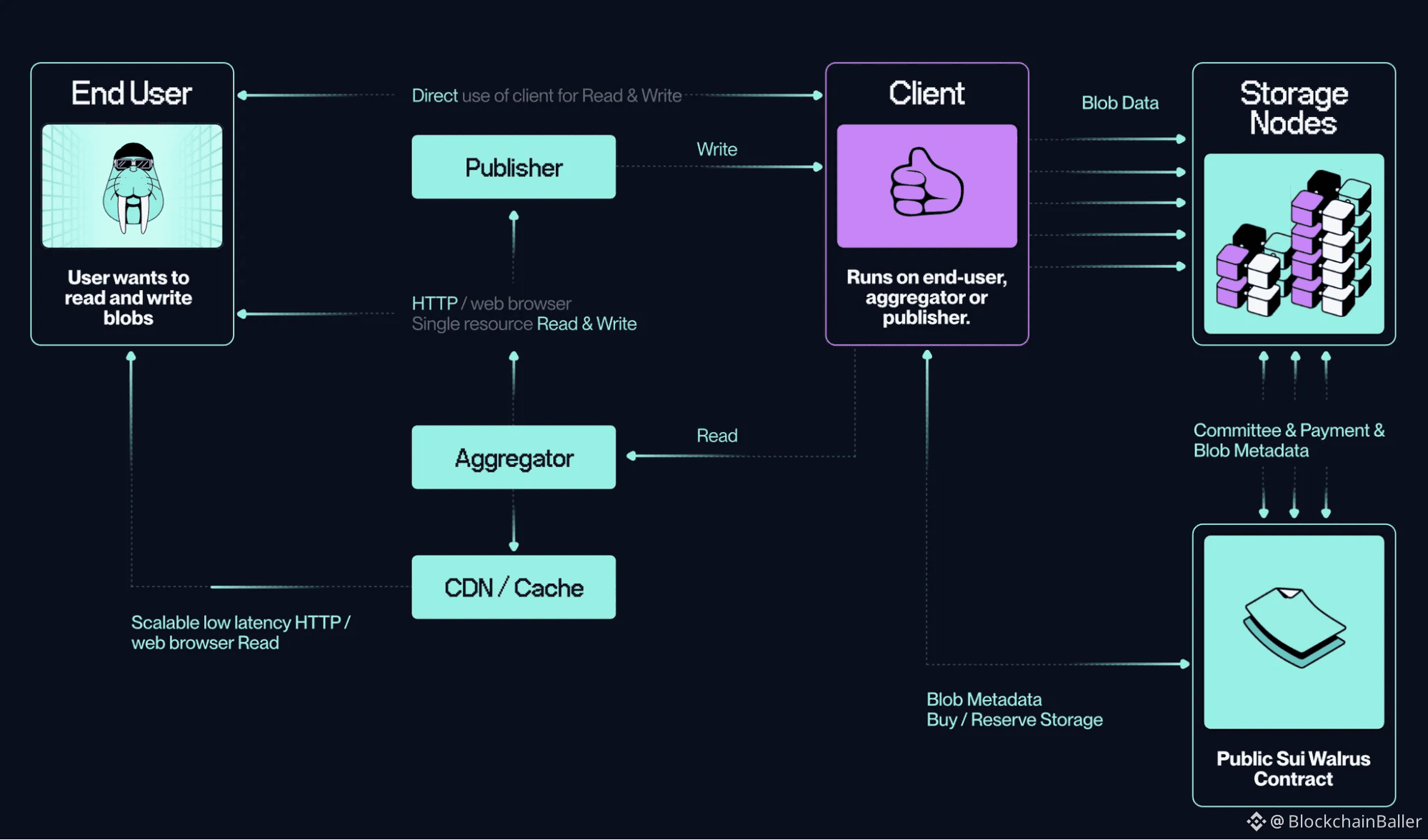
At the core of Walrus is a simple but powerful idea: data ownership should belong to users, not infrastructure providers. In traditional systems, data is stored on centralized servers controlled by corporations. Access can be restricted, content can be removed, and entire platforms can disappear overnight. Even many Web3 applications rely on centralized storage behind the scenes, creating hidden points of failure. Walrus replaces this model with protocol-level guarantees enforced by cryptography and economic incentives.
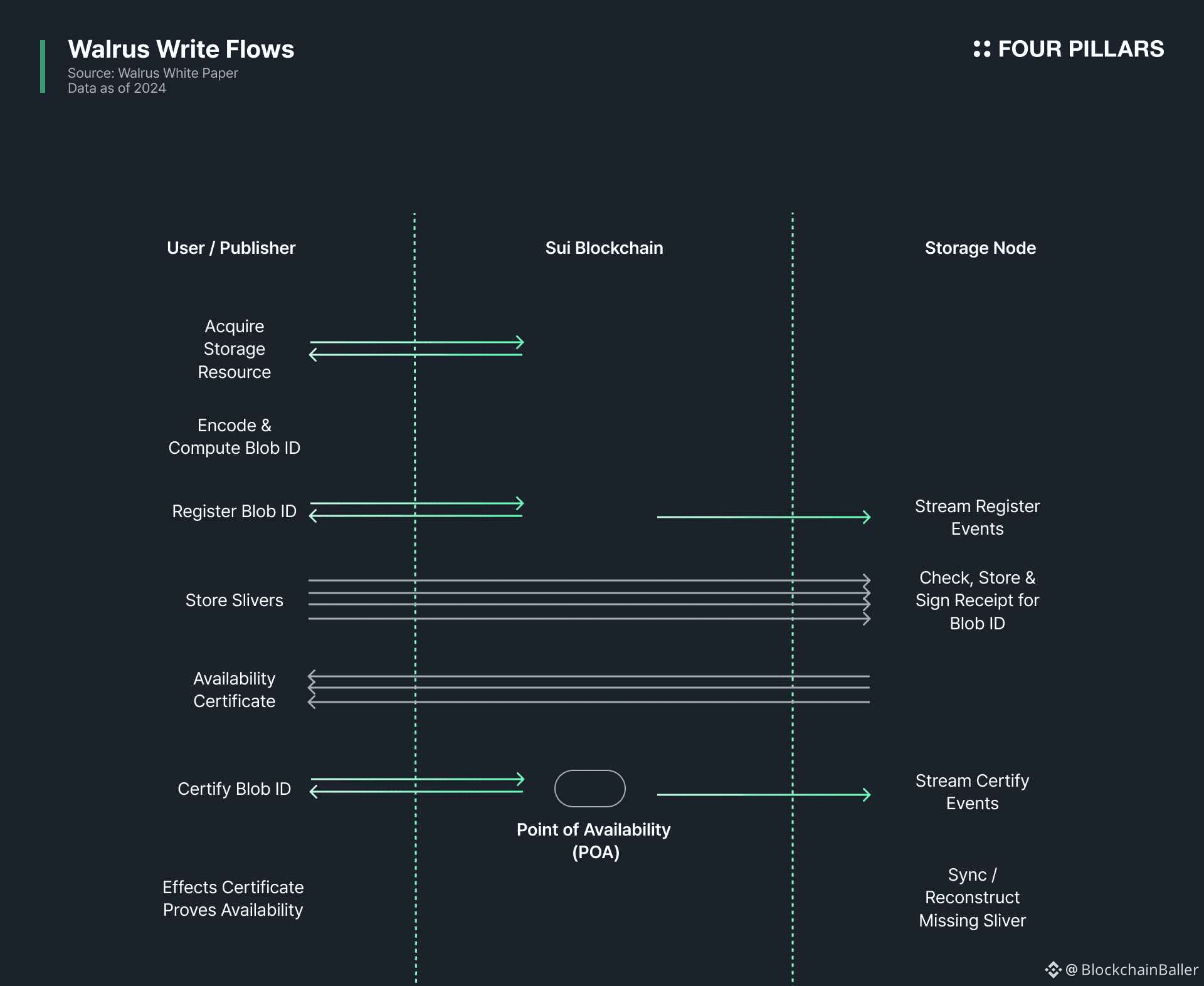
Walrus is built on the Sui, using Sui as the execution and settlement layer while handling data off-chain. This integration allows Walrus to anchor ownership proofs, references, and verification logic on-chain, while the actual data lives in a decentralized storage network. Sui’s object-based and high-throughput architecture makes this modular design efficient and scalable, allowing both layers to grow independently without bottlenecks.
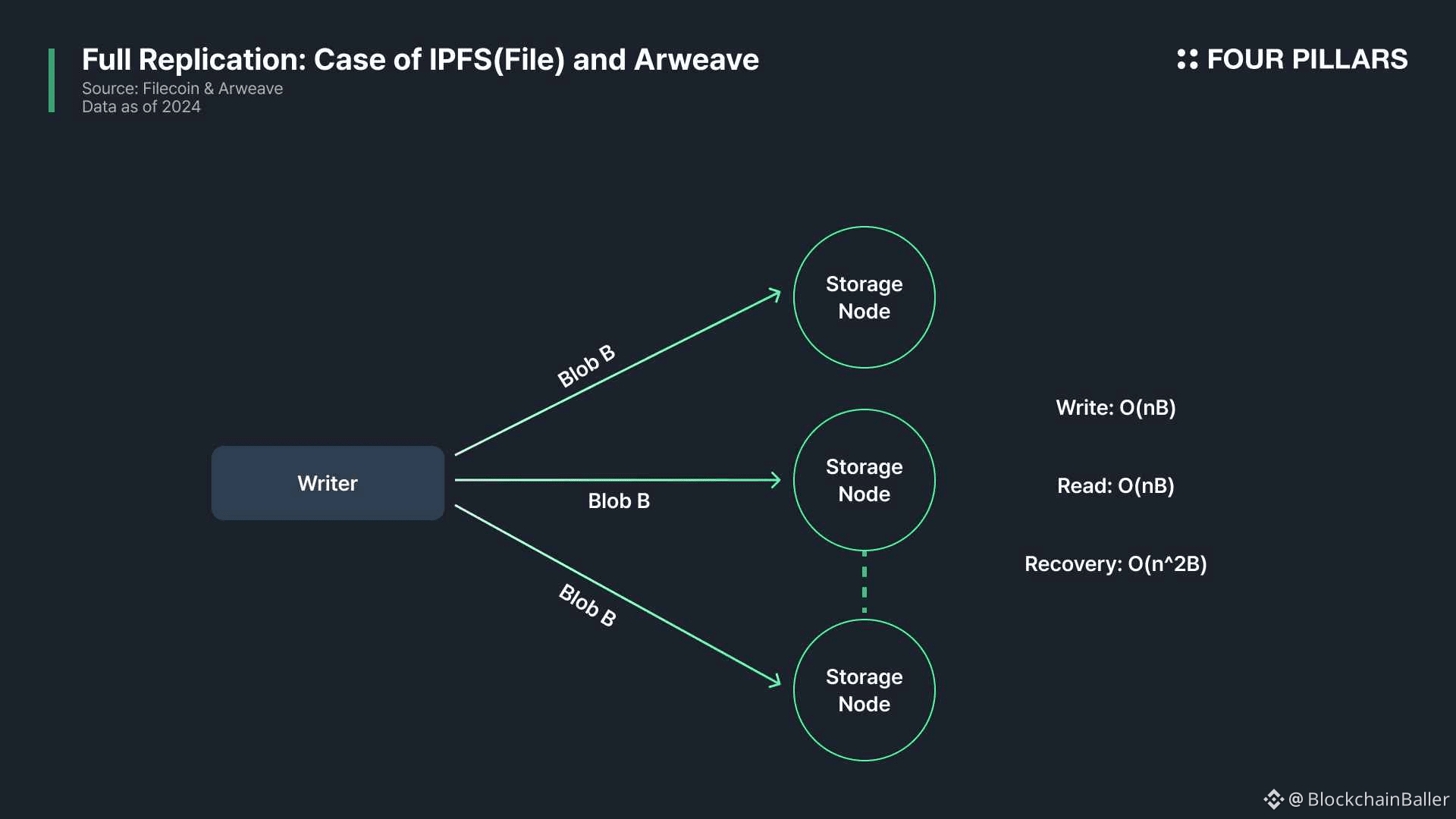
A defining technical feature of Walrus is its use of blob storage combined with erasure coding. Large files are split into multiple fragments, encoded with redundancy, and distributed across many storage nodes. Even if some nodes go offline or fail, the original data can still be reconstructed. This approach provides strong durability and availability guarantees while using significantly less storage overhead than simple replication, keeping costs predictable and efficient.
Privacy is a foundational principle in Walrus, not an optional add-on. Data can be encrypted before it is uploaded to the network, ensuring that storage providers cannot read, inspect, or censor the content they host. Access is controlled entirely through cryptographic keys, meaning users and applications decide who can view or use the data. This makes Walrus suitable for sensitive use cases such as enterprise records, private application state, personal files, and confidential datasets.
Because data is encrypted, fragmented, and distributed across many independent participants, Walrus is naturally censorship-resistant. No single entity has the ability to remove, block, or alter content. This preserves data sovereignty and aligns Walrus with the core Web3 values of permissionless access, resilience, and user ownership.
The WAL token underpins the Walrus ecosystem and serves a functional role rather than a purely speculative one. Storage providers earn WAL for reliably storing and serving data, creating direct incentives for uptime and performance. Providers may also be required to stake WAL as collateral, introducing accountability and discouraging malicious behavior or prolonged downtime. This economic design aligns individual incentives with long-term network health.
Governance within Walrus is decentralized and community-driven. WAL holders can participate in decisions related to protocol upgrades, incentive models, storage parameters, and long-term development direction. This ensures that Walrus evolves transparently and in alignment with its users, rather than under centralized control.
From a developer perspective, Walrus solves a persistent architectural challenge. Many decentralized applications rely on centralized storage for images, videos, datasets, and logs, weakening the promise of decentralization. Walrus allows developers to store large assets off-chain while maintaining cryptographic guarantees of integrity and availability. Smart contracts can reference Walrus data through hashes or object identifiers, avoiding the cost and limitations of on-chain storage while preserving trust.
Walrus is particularly well suited for data-intensive applications. NFT platforms can store high-resolution media and metadata without relying on centralized servers. Games can distribute assets, maps, and updates in a decentralized way. AI-driven applications can securely store datasets and model inputs. Decentralized social platforms can host user content without surrendering control to traditional cloud providers.
Cost efficiency is another important advantage. Centralized cloud storage operates with high margins and long-term vendor lock-in. Walrus introduces a decentralized storage marketplace where providers compete, and pricing is shaped by supply and demand. Erasure coding further reduces redundancy costs, making large-scale storage more economical over time.
Walrus also plays an important role in data availability, which is increasingly critical for modular blockchains, rollups, and off-chain computation. By ensuring that application data remains accessible and verifiable, Walrus supports architectures where execution, settlement, and data are handled by specialized layers working together.
From an enterprise and institutional perspective, Walrus offers a credible alternative to centralized storage. Its encryption-first design, transparent incentive model, and protocol-enforced guarantees provide a foundation for systems that require resilience, privacy, and long-term reliability. Trust is enforced by code rather than contracts or corporate assurances.
Strategically, Walrus focuses on specialization. It does not attempt to replace blockchains or execution environments. By concentrating exclusively on decentralized data storage and availability, Walrus strengthens the broader Web3 stack and improves composability across ecosystems.
As Web3 continues to mature, data can no longer be treated as an afterthought. It is core infrastructure. Walrus represents a shift toward treating data with the same rigor as financial systems, execution layers, and consensus mechanisms. By combining scalable storage, privacy by design, decentralized incentives, and deep integration with the Sui blockchain, Walrus is laying the groundwork for a truly decentralized, resilient, and user-owned internet.