Dusk Network feels like it was born from a quiet realization that most crypto conversations miss. When people talk about putting finance on-chain, they often imagine radical transparency as the ultimate virtue. But anyone who has actually worked with money knows that full exposure is not how trust is built. It’s how mistakes spread, risks multiply, and people get hurt. Dusk starts from that lived reality, not from ideology, and that alone makes it different.
At its heart, Dusk is not chasing hype cycles or social media noise. It is responding to a very human tension. We want systems that are open, efficient, and shared. At the same time, we don’t want our salaries, investments, contracts, or financial history exposed forever. That feeling isn’t weakness. It’s common sense. Privacy in finance isn’t about hiding wrongdoing. It’s about protecting people from harm, pressure, manipulation, and misunderstanding. Dusk treats this truth seriously.
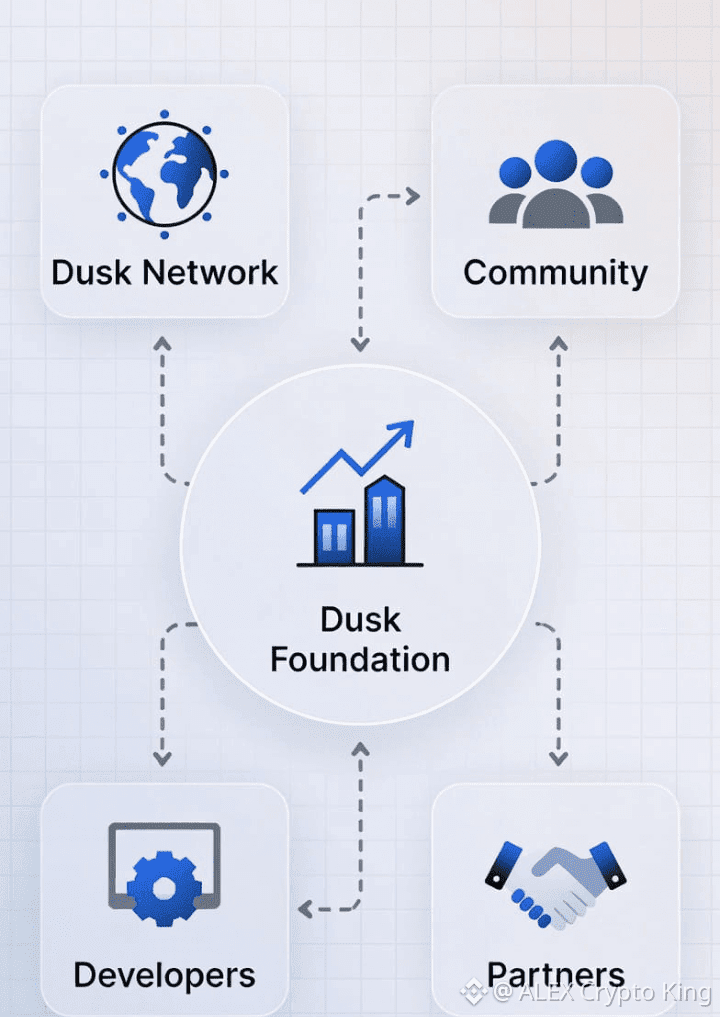
What makes Dusk stand out is how calmly it accepts that finance needs structure. Laws exist. Reporting exists. Oversight exists. Ignoring these facts doesn’t make a system freer, it just makes it unusable at scale. Dusk doesn’t force a choice between privacy and compliance. Instead, it builds an environment where both can exist without breaking each other. Data stays private by default, but it can be proven correct and revealed when rules require it. That balance is not flashy, but it’s powerful.
One of the most important ideas behind Dusk is that trust should not rely on promises or reputation. Promises fail under pressure. Power distorts them. Cryptographic proof does not care who you are. If a transaction follows the rules, the system can prove it without exposing sensitive details. That changes everything. Privacy becomes enforceable, not optional. Truth becomes verifiable, not assumed. For finance, this shift from hope to proof is enormous.
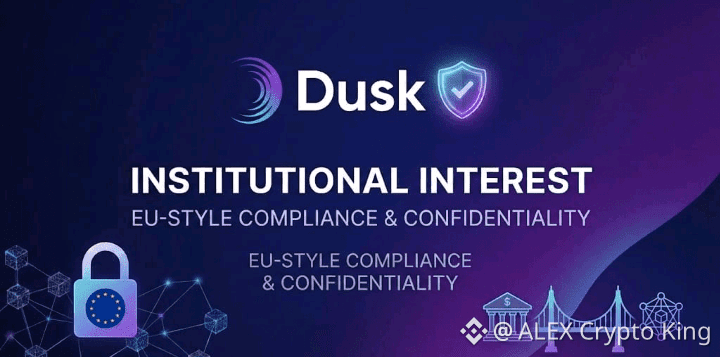
Dusk also understands that not all actions are meant to be treated the same. Some transactions benefit from being public. Others become dangerous when exposed. Forcing every user into one transparency model ignores how real people and institutions behave. In the real world, some records are public by law and others are confidential by necessity, and both coexist without contradiction. Dusk mirrors this reality by allowing different types of transactions to live on the same settlement layer, each with the protection or visibility it needs.
There is also a deep respect for how finance actually works beneath the surface. Money is not just about moving value. It’s about conditions, rights, timing, and obligations. Many of these details cannot be made public without changing outcomes or creating unfair advantages. Dusk is built with the assumption that private data must be processed securely while still producing results that anyone can verify. Privacy isn’t added later. It’s woven into how the system validates change.
What’s striking is that all this complexity is meant to stay invisible to the user. Real adoption doesn’t come from asking people to understand cryptography or consensus mechanics. It comes from systems that feel normal to use while quietly doing something extraordinary underneath. Dusk aims to hide complexity without weakening guarantees, which is one of the hardest problems in this space, especially for privacy-focused networks.
Time also matters, and Dusk treats it with respect. Slow settlement creates risk, locks capital, and favors only those who can afford to wait. A system meant for real finance must finalize transactions quickly and decisively. Dusk builds fast finality into its core, not as a bonus feature but as a requirement. Without certainty, efficiency collapses, and finance stops functioning fairly.
It’s clear that institutions are part of the picture, but not through closed doors. Fully permissioned systems lose the strength of open participation, while fully open systems often ignore regulatory reality. Dusk walks the narrow path in between. It offers a public network that can still host regulated activity, because the protocol itself supports privacy, auditability, and controlled disclosure. This avoids forcing every application to rebuild these foundations from scratch.
Auditability, in Dusk’s world, is not the enemy of privacy. It’s selective, purposeful, and human. In real finance, auditors don’t publish everything they see. They verify correctness and issue conclusions. Dusk follows this same logic, allowing the right parties to verify the right facts without turning the network into a public display of sensitive information. Proof-based privacy makes this possible.
When you think about real-world assets on-chain, Dusk starts to feel almost inevitable. Tokenization promises efficiency and programmability, but it fails if it ignores how markets behave. No serious market reveals every position or participant in real time. A privacy-capable chain allows assets to move on-chain without forcing markets to abandon common sense. That’s how tokenization becomes usable, not just experimental.
Even the economic design reflects long-term thinking. Clear staking rules, predictable incentives, and penalties that encourage honest behavior allow the network to be treated as infrastructure, not a gamble. Fees that reflect real computational cost protect the system from abuse and overload. This isn’t about extracting value. It’s about keeping the network alive and reliable when real capital depends on it.
Zooming out, Dusk feels like part of a quiet shift in crypto thinking. Trust doesn’t have to come from radical transparency. It can come from verifiable correctness, even when details stay private. If blockchains want to support the systems that already move most of the world’s money, this shift is unavoidable. Those systems will not abandon privacy. They will only adopt tools that respect it.
This path is not easy, and nothing is guaranteed. Combining privacy, smart contracts, fast settlement, and regulatory compatibility is one of the hardest challenges in the entire space. Many projects fail by solving only one piece. Dusk exists because it believes solving all of them together is the only way forward. If that belief turns into lasting infrastructure, it won’t just improve crypto. It will change how we think about public networks and private finance.