Large decentralized systems usually fail not because of technology, but because coordination becomes too complex. Every application that manages its own storage providers, verification rules, and redundancy strategies has to solve the same organizational problem again and again. Walrus can be viewed as a way to compress this complexity into a shared protocol.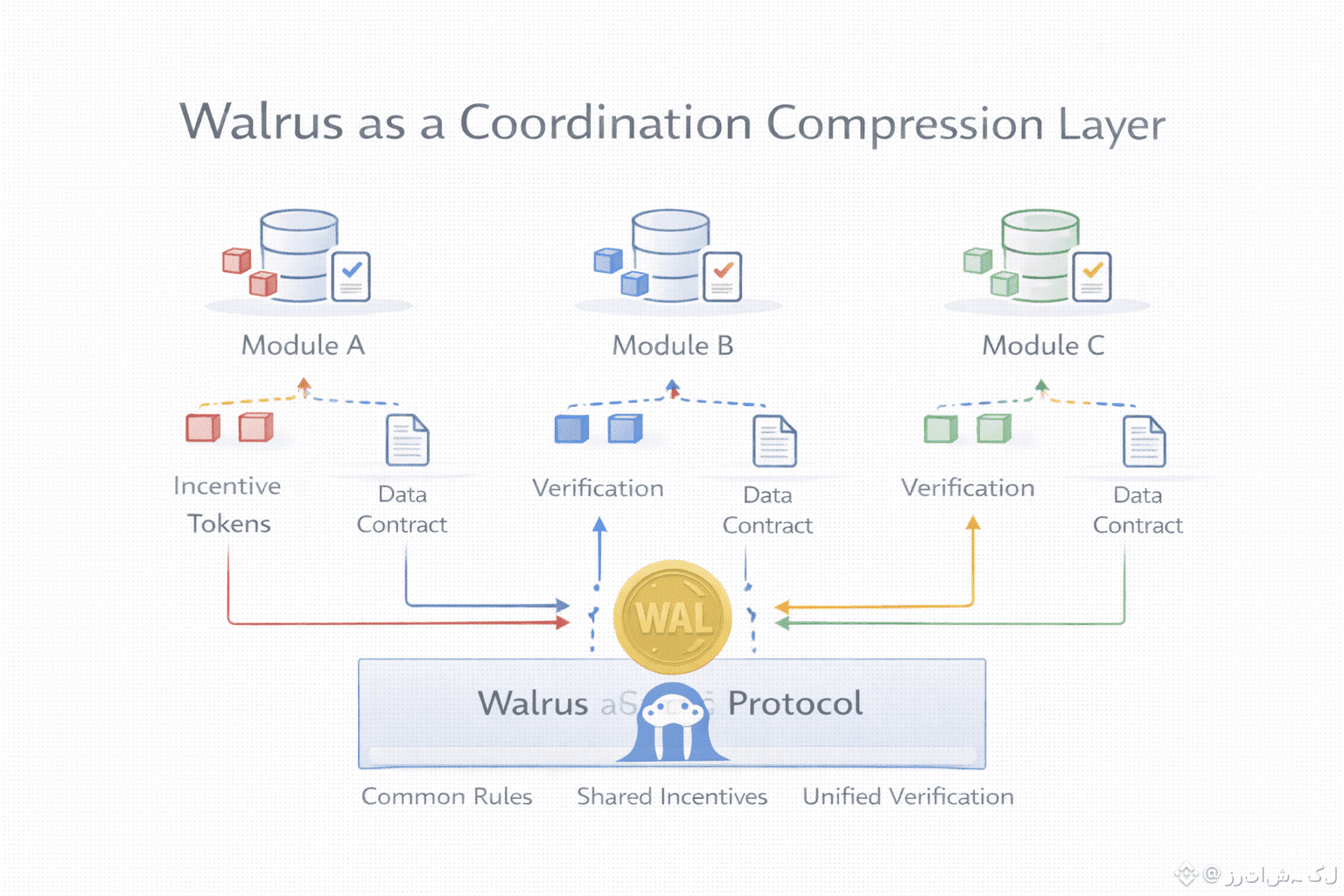
Instead of each project designing its own agreements with storage operators, Walrus provides a common set of rules, incentives, and verification mechanisms. The WAL token exists inside this system as part of how participants align their behavior, not as an external add-on. The result is that many independent actors can behave like one coherent machine.
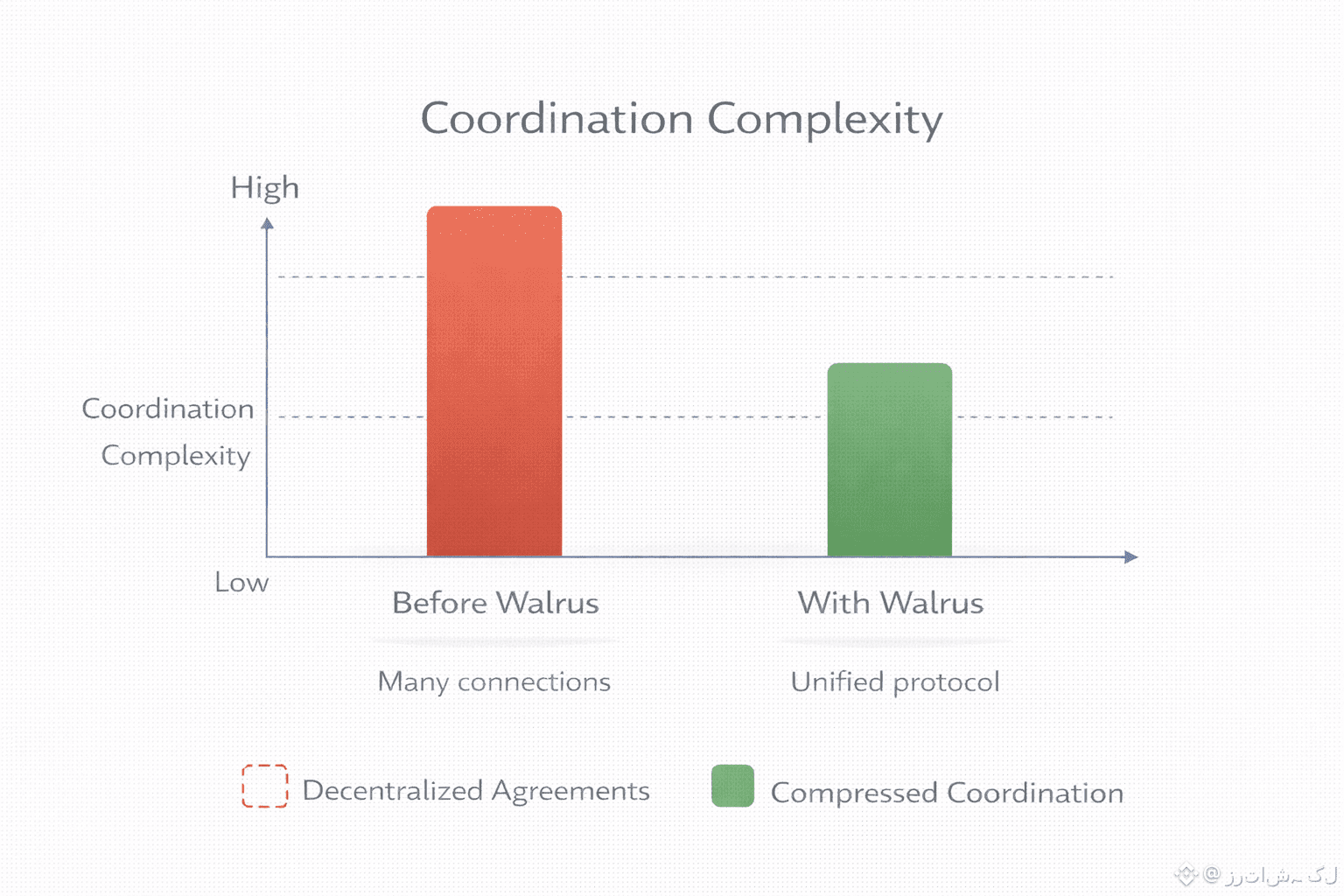
This is an underappreciated role of infrastructure. Its real value is not only technical, but organizational. By standardizing how coordination works, it reduces the number of decisions every application has to make. Builders can focus on their products instead of reinventing operational frameworks.
From this perspective, Walrus is not just about data. It is about reducing the social and technical friction of running complex decentralized systems at scale.